Journal
Why Nepali Pashmina is the Real Thing — Chyangra wool, hand-spun, hand-loomed
A buyer's guide to authentic Nepali Chyangra pashmina: the goat, the altitude, the spinning, the weave — and how to spot the fakes flooding the wholesale market.
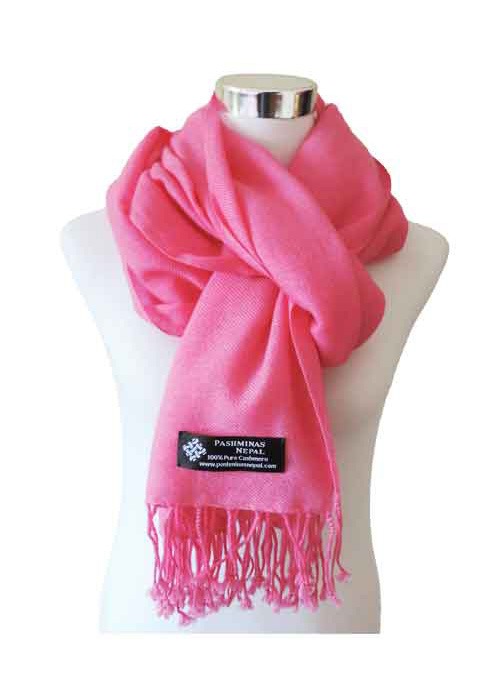
The wholesale pashmina market is, frankly, a mess. Walk a sourcing floor in Bangkok or Dubai and three out of four "100% Nepali pashmina" labels will dissolve under a burn test or a microscope. The actual product — wool from Chyangra goats grazed at 4,500 metres, hand-spun on a charkha, hand-loomed on a treadle frame — is rare enough that authentic supply rarely leaves the Kathmandu Valley without a buyer who already knows the workshop.
This is the buyer's note we wish existed when we started shipping pashmina in 2004. It's the same brief we send our European boutique partners on their first order, plus a few field-tested checks for the people sourcing their first container.
What "Chyangra" actually means
Chyangra (च्याङ्ग्रा) is the Nepali name for Capra hircus, the high-altitude goat whose undercoat produces the fibre we sell as pashmina. Not every goat. Not every altitude. The fibre quality the international market wants comes from goats grazed above the 4,500-metre line in Mustang and Dolpa — where temperature swings between day and night force the animal to grow a fine, hollow undercoat for insulation.
That undercoat (pashm in Persian, the root of the word) measures 12–16 microns. By comparison, merino wool is 18–22 microns and "blanket wool" is 30+. The micron count is the entire game — it's why pashmina drapes the way it does and why it costs what it costs.
The four-step authenticity check
Before you buy a single shawl, run these four checks on the workshop's sample. Any one of them failing is a red flag.
- Burn test. Snip a 1cm square from a hidden corner. Real pashmina burns to a black ash and smells like burning hair (it's keratin). Polyester or viscose blends melt into a hard plastic bead and smell sweet or chemical.
- Ring test. A genuine pashmina shawl (200 × 80 cm) should pull cleanly through a wedding ring. If it snags or balks, the yarn count is too coarse or the weave too tight — usually a sign of blended fibre.
- Friction warmth. Rub a small section between your palms for 15 seconds. Pashmina warms noticeably; synthetic and silk-blend "pashminas" stay cool because they don't trap air the same way the hollow Chyangra fibre does.
- Edge inspection. Real hand-loomed pashmina has a slightly uneven selvedge — the hand of the weaver, not a machine. Perfectly straight edges with knotted fringes punched in by a serger are mass-loom production, often blended with rayon.
Why the price varies so much
Authentic Chyangra pashmina retails wholesale in Kathmandu between US$45 and US$220 per shawl. The spread isn't margin — it's fibre grade, weave count, and dye method. A few of the price drivers:
- Fibre micron count. 12-micron undercoat (the finest) is roughly 3× the price of 16-micron.
- Pashmina-silk blend ratio. 70/30 pashmina/silk is the durable wholesale standard. 100% pashmina is softer but more delicate and 25–40% more expensive.
- Hand-spinning vs mill-spinning. Mill-spun yarn from imported Chinese fibre is cheaper but shows uniform thickness under a loupe. Hand-spun on a charkha has the irregular character buyers pay for.
- Natural vs azo-free synthetic dye. Indigo, madder, walnut hull, and Himalayan rhubarb add roughly 15% to the unit cost but unlock the EU REACH-compliant retail tier.
What we ship from Kathmandu
We work with three workshops in Bhaktapur and one cooperative in Lalitpur. Our standard wholesale offering is 70/30 pashmina/silk, 200 × 80 cm, hand-loomed, in 14 colourways including five plant-dyed naturals. Minimum order quantity starts at 50 pieces per colour, lead time 4–6 weeks for hand-loomed orders, 2–3 weeks for stock colours.
Every shipment travels with the workshop's hand-stamp and the names of the weavers — we publish a fair-trade signature sheet with the invoice. For boutique buyers we also do a 5-piece "test pack" at MOQ-waived pricing so you can run the four checks above on real product before committing to a container.
Talk to us
If you're sourcing pashmina for a winter capsule, a hotel amenity gift, or a wholesale boutique line — start with a WhatsApp message describing your buyer profile and target retail tier. We'll come back with a sample-pack proposal and an honest read on whether what you want is something we can do.
Browse the full export catalogue or jump straight to pashmina shawls.
Talk to a sourcing desk
Want a market-ready sample pack?
Send us your buyer profile and target retail tier on WhatsApp. We come back with a sample-pack proposal within 48 hours.
Inquire on WhatsApp